
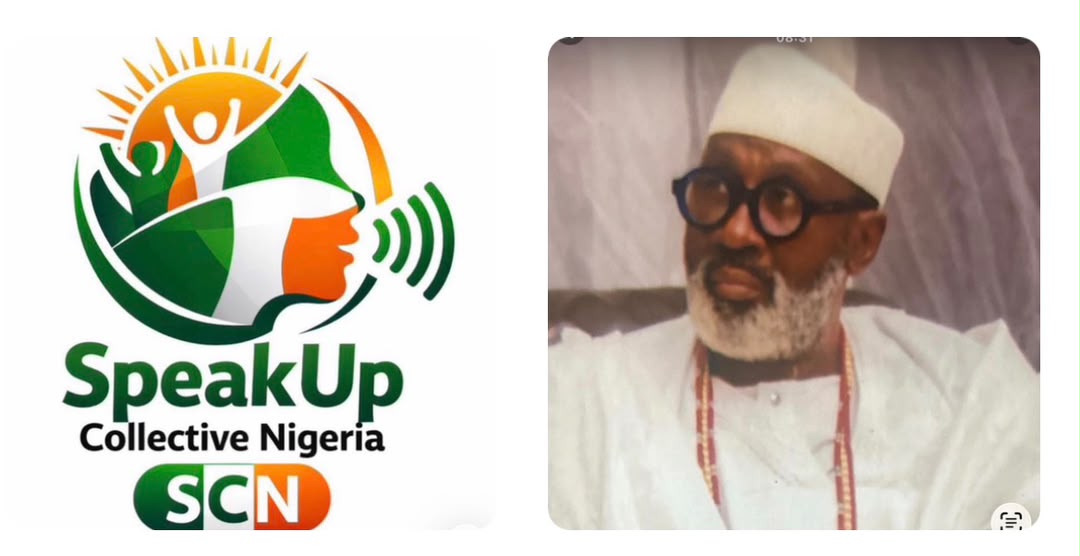

By Otunba (Dr.) Abdulfalil Abayomi Odunowo
Every nation writes its history not just through the laws it passes, but through the values it rewards. Young people pay less attention to speeches than to results. They watch who prospers, who suffers, who gets celebrated, and who fades from view. In that quiet observation sits the real curriculum of nation-building.
When a society lets those accused or convicted of corruption return to influence with barely any consequence, while honest public servants, entrepreneurs, teachers, soldiers, scientists, healthcare workers, and innovators struggle with little recognition, it quietly teaches that integrity is optional and dishonesty pays.
This is, perhaps, one of the gravest dangers facing Nigeria today.
History Offers Powerful Lessons
No civilization has sustained greatness by placing corruption above character. History, as we know, is full of sobering examples of empires and societies brought low by this very failure.
The decline of the Roman Republic offers a sharp warning. As historian Ramsay MacMullen documented in Corruption and the Decline of Rome, political patronage, bribery, and the turning of public office into tools of personal enrichment hollowed out republican institutions. Loyalty moved from the state to powerful individuals. Elites like Marcus Licinius Crassus amassed fortunes through corrupt speculation that rivaled the treasury itself, while bribery delivered political honors. That erosion of norms fed polarization, civil wars, and the Republic’s eventual fall into autocracy, followed by the Empire’s later fragmentation.
Similar patterns surfaced across empires. The later Mughal Empire in India, the Ottoman Empire, and Chinese dynasties all went through cycles in which centralized power bred bureaucratic decay, sale of offices, and elite self-enrichment, speeding decline and inviting either external conquest or internal collapse.1
In Africa’s post-colonial era, many nations echoed these historical traps. Where public resources became pipelines for private wealth and accountability weakened, economic stagnation, infrastructural decay, investor flight, and fraying social trust followed.
Nigeria has not escaped this pattern.
Since independence in 1960, the country has seen successive anti-corruption drives, from military regimes to civilian administrations, including the creation of bodies like the ICPC and EFCC, stronger procurement laws, and high-profile prosecutions. Yet corruption endures as a developmental scourge. Estimates suggest Nigeria lost over $400 billion to corruption between independence and the early 21st century, with specific scandals like the $12.4 billion Gulf War oil windfall under Babangida and billions looted under Abacha underscoring how deeply entrenched the system became across regimes.
The challenge is not merely legal, it is cultural.
Corruption Is More Than Stolen Money
Many people reduce corruption to politicians looting public funds. The truth is broader, and frankly more dangerous. It shows up when:
- Contracts are awarded without merit or through kickbacks (a notorious “10%” culture noted even in the First Republic);
- Examinations are compromised for grades;
- Justice is bought in courts;
- Recruitment and promotions favor connections over competence;
- Taxes are evaded or public property vandalized;
- Votes are purchased and fake products knowingly sold;
- Employers exploit workers or citizens offer bribes to bypass lawful processes.
These everyday betrayals, documented across Nigerian history from the Foster-Sutton Tribunal of 1956 onward, drain national productivity, choke innovation, and widen inequality far more than isolated grand thefts.
Corruption, then, is not simply a government problem. It is a societal one.
Nations That Changed Their Story
Thankfully, history also shows that change is possible through deliberate, sustained action.
After independence, Singapore confronted rampant corruption, high unemployment, poor infrastructure, and scant resources. Under Lee Kuan Yew’s leadership, the government enacted the Prevention of Corruption Act, empowered the Corrupt Practices Investigation Bureau (CPIB) with independence and resources, enforced merit-based civil service appointments, and paid competitive salaries to attract top talent. Lee saw a clean government as a core economic asset. Today, Singapore consistently ranks among the world’s least corrupt nations (often top 3-5 globally on Transparency International’s index) and among its most prosperous economies, a clear testament to zero-tolerance enforcement and cultural change.
Rwanda, emerging from the 1994 genocide, pursued ambitious institutional reforms under President Paul Kagame. Through Vision 2020 and Vision 2050, it strengthened public accountability, digitized services, emphasized civic responsibility and national unity (“Rwandanness”), and invested heavily in governance, education, and health. While contexts differ, its gains in stability, service delivery, and economic growth show how determined leadership and accountability can drive post-crisis renewal.
The lesson for Nigeria is not blind imitation, but a simple truth: lasting progress demands consistent rule enforcement, respect for institutions, and political will from the top.
Nigeria Must Reward Its Heroes
Every society has heroes beyond those in uniform. They include:
- Teachers shaping future generations;
- Doctors serving remote communities;
- Honest civil servants refusing bribes;
- Entrepreneurs creating jobs despite obstacles;
- Farmers sustaining food security;
- Researchers confronting local challenges;
- Responsible journalists exposing wrongdoing;
- Security personnel risking lives;
- Judges delivering impartial justice.
When their sacrifices draw less acclaim than the excesses of the corrupt, a society’s moral compass begins to drift. Recognition, justice, and merit must become national imperatives.
The Path Nigeria Must Follow
Nigeria’s future rests on moral and institutional renewal alongside economic reform. Key enduring priorities include:
- Fortify independent institutions so accountability rests on law, not political patronage or affiliation.
- Ensure swift, transparent, impartial investigations that treat allegations seriously without presuming guilt, yet refuse to shield the influential.
- Actively reward integrity through promotions, national honours, scholarships, and public celebration.
- Embed civic education that emphasizes that citizenship carries responsibilities, not just rights.
- Reduce opportunities for corruption through expanded digital governance, transparent procurement, open budgeting, and e-services.
- Uphold the rule of law, predictable, impartial, and insulated from interference.
A Choice Between Two Futures
Every generation inherits a nation, but it also shapes its legacy. If Nigeria consistently rewards integrity, our children will aspire to excellence and service. If it normalizes corruption, they will copy it. No campaign against graft can succeed unless honesty brings greater rewards than dishonesty. No economic reform can thrive under selective justice. No democracy can endure without public trust.
Nigeria possesses extraordinary human talent, entrepreneurial drive, abundant resources, and resilient people. These can build one of Africa’s greatest success stories, but only if institutions place character above connections, competence above patronage, and service above self-interest.
The true wealth of any nation lies not in its soil or treasury, but in the values its people choose to honour. If we celebrate our heroes before pardoning our criminals, Nigeria will not merely fight corruption. We will build a nation where graft is seen as a betrayal of public trust, and integrity becomes the surest path to honour, opportunity, and enduring national greatness. The choice is ours, and history is watching.
Written by: Otunba (Dr) Abdulfalil Abayomi Odunowo
National President (SCN), SpeakUp Collective Nigeria