
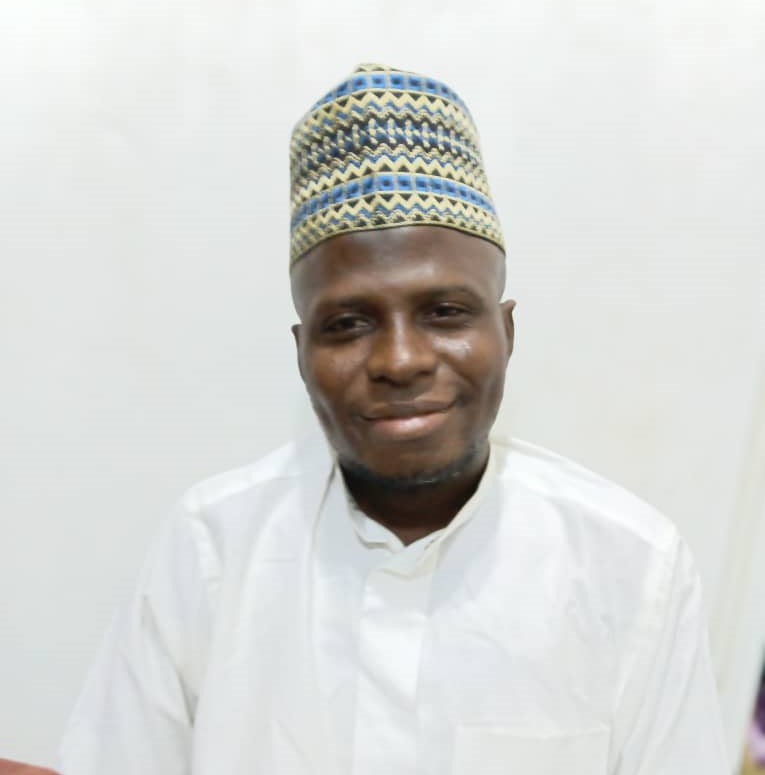

— Bello Lateef Oluwaseun
Nigeria stands at a critical point in its national journey, where the questions of unity, national cohesion, security, political stability, economic prosperity and sustainable development demand urgent attention. As a nation blessed with diverse ethnic groups, languages, cultures, religions and natural resources, Nigeria possesses enormous potential to become one of Africa’s greatest success stories.
However, the challenges confronting the country have continued to generate debates about national unity, restructuring, regional autonomy, division and separation. While these debates reflect the concerns and frustrations of some Nigerians, it is important to recognise that Nigeria’s unity, cohesion and indivisibility are not the fundamental problems of the country, and division or separation is not a guaranteed solution to the challenges confronting our national development.
The real question should not be whether Nigeria should remain one country or break apart, but how we can build a nation in which justice, equity, accountability, security, economic opportunity and good governance are available to all citizens, irrespective of their ethnic, religious, regional or political affiliations.
National Unity Is an Asset, Not a Liability
The unity of Nigeria should be viewed as a national asset capable of promoting collective strength, economic cooperation, political influence and social advancement. Our diversity, when properly managed, can become a source of national greatness rather than a reason for mutual suspicion and division.
Nigeria’s different ethnic nationalities and communities have contributed immensely to the development of the country. From commerce and agriculture to education, science, technology, entertainment, sports and public administration, Nigerians have demonstrated that cooperation across cultural and regional boundaries can produce remarkable achievements.
A united Nigeria possesses a large domestic market, a substantial human resource base, diverse agricultural and mineral resources, and the potential to attract investment on a scale that benefits its constituent communities.
Nevertheless, unity cannot be sustained by slogans alone. It must be supported by fairness, constitutional democracy, respect for human rights, responsible leadership and an inclusive distribution of opportunities.
Unity without justice creates resentment, but unity strengthened by justice creates patriotism and national confidence.
Therefore, defending Nigeria’s unity must go hand in hand with correcting the injustices, inequalities and governance failures that weaken the confidence of citizens in the Nigerian project.
Division and Separation: Are They Really the Panacea?
The agitation for separation in different parts of Nigeria cannot be understood without acknowledging the historical grievances, political frustrations, economic concerns and feelings of marginalisation expressed by some citizens and communities.
These concerns deserve serious attention rather than dismissal. A nation that wishes to remain united must listen to the voices of its people, particularly those who believe that the existing political and economic arrangements do not adequately protect their interests.
However, separation should not be presented as an automatic cure for insecurity, unemployment, corruption, poverty, poor infrastructure or political exclusion. A new country, if created, would still need effective institutions, responsible leadership, economic resources, security structures, social cohesion and a workable system of governance.
Likewise, division could introduce new challenges involving citizenship, territorial boundaries, resource ownership, trade, migration, public debt and the protection of minority communities.
These possibilities do not mean that every argument for self-determination is without merit. Rather, they demonstrate that the consequences of separation are complex and that the promise of a better future must be assessed against practical realities.
The fundamental lesson is that changing national boundaries does not automatically change the quality of leadership, the integrity of public institutions or the economic conditions of the people.
Nigeria must therefore pursue practical solutions that address the causes of discontent while protecting the rights, dignity and legitimate aspirations of its citizens.
The Real Problem: Governance, Leadership and Accountability
If Nigeria must move forward, the country must confront the problems that obstruct its progress.
Corruption, inadequate public services, unemployment, insecurity, poor infrastructure, weak institutions, educational challenges and the unequal distribution of opportunities remain issues that require sustained attention.
The country also needs a political culture in which public office is treated as a position of responsibility rather than an instrument of personal enrichment.
Leaders at every level of government must demonstrate transparency, discipline, competence and accountability. Public resources should be deployed for the benefit of the people, while public institutions should operate according to the law rather than the interests of powerful individuals.
Citizens, too, have a responsibility to demand accountability peacefully, participate in democratic processes, respect the rights of others and reject political manipulation based on ethnic or religious differences.
A country cannot achieve sustainable development when its people are continually divided by distrust while the fundamental issues affecting their welfare remain unresolved.
Restructuring and Inclusive Governance as Instruments of Progress
Preserving Nigeria’s unity does not mean that the country must retain every existing political or administrative arrangement without question.
Indeed, a united Nigeria can pursue constitutional reforms, fiscal federalism, stronger local governance, greater regional development, improved security coordination and more effective resource management.
Such reforms should be designed through lawful, democratic and inclusive processes, with meaningful participation from all regions and communities.
The objective should be to make the Nigerian federation more responsive to the needs of its people, strengthen accountability at every level and ensure that communities have genuine opportunities to participate in decisions affecting their future.
Restructuring, where necessary and properly implemented, can become an instrument for strengthening national unity rather than weakening it.
The emphasis must be on building institutions that work, ensuring that government responds to the people and creating an environment in which every Nigerian feels a genuine sense of belonging.
Youth Employment and Economic Development: The Foundation of National Stability
Nigeria’s young population represents one of the country’s greatest opportunities. Yet, unemployment, underemployment and limited economic opportunities can deepen frustration and make young people vulnerable to exploitation, criminal recruitment and divisive political narratives.
The solution requires deliberate investment in education, vocational training, technology, agriculture, manufacturing, entrepreneurship and small businesses.
Government should create an enabling environment for private-sector investment, improve access to affordable finance, strengthen technical and vocational education, and support innovation among young Nigerians.
National development must also extend beyond major urban centres. Rural communities and underserved regions require roads, electricity, healthcare, schools, water supply and productive economic activities.
When citizens see tangible improvements in their standard of living, they have stronger reasons to believe in the future of their country.
A united Nigeria that provides opportunities for its people will be better positioned to resist the forces of violence, extremism, political manipulation and national disintegration.
Security and National Cohesion Must Go Together
No nation can develop sustainably without security. Nigeria must continue to strengthen its security institutions, improve intelligence gathering, address the causes of violent conflict and protect the lives and property of all citizens.
Security strategies should be professional, accountable and consistent with the rule of law and human rights.
Community participation, early-warning mechanisms, conflict resolution, effective policing and cooperation between federal, state and local authorities can contribute to a safer society.
Any discussion about community-based security arrangements must also consider constitutional responsibilities, appropriate training, oversight and safeguards against abuse.
The objective should be to create a country in which Nigerians can live, work, travel, worship and conduct business without fear.
Security is not merely a military or policing concern; it is also connected to economic opportunity, social justice, responsible leadership and public confidence in government.
A Call for National Patriotism and Collective Responsibility
The responsibility for building a better Nigeria does not belong to the President, governors, legislators or political parties alone. It belongs to every Nigerian.
Traditional rulers, religious leaders, civil society organisations, professional associations, the media, educational institutions, business communities and ordinary citizens all have important roles to play.
Political leaders must stop exploiting ethnic and religious differences for electoral advantage. Religious and community leaders should promote peaceful coexistence. The media should encourage responsible public debate, while citizens should resist misinformation and reject calls for violence.
National patriotism should not mean refusing to criticise government. On the contrary, constructive criticism is an essential part of democracy. Nigerians must be free to question policies, demand reforms and hold leaders accountable without being labelled enemies of the nation.
True patriotism means working for a country that treats its citizens fairly, protects their rights and provides opportunities for them to prosper.
Our collective task is to transform Nigeria from a country of competing suspicions into a nation of shared responsibilities, common aspirations and equal citizenship.
Conclusion: One Nigeria, Shared Responsibility, Common Destiny
Nigeria’s challenges are serious, but they should not convince us that national division is the only available path to progress. The country still possesses the human resources, economic potential, cultural richness and collective capacity required to build a prosperous future.
The choice before Nigerians is whether to allow longstanding grievances, political failures and mutual distrust to deepen national divisions, or to confront these problems through dialogue, democratic reform, justice, responsible leadership and inclusive development.
Maintaining Nigeria’s unity must never become an excuse for ignoring injustice. Equally, the pursuit of justice and development should not be reduced to the assumption that separation will automatically deliver prosperity.
The better path is to build a federation in which every citizen matters, every community is respected, public institutions are accountable and opportunities are available without discrimination.
Let us move beyond the politics of suspicion and embrace the politics of solutions. Let us build a Nigeria in which unity is strengthened by fairness, cohesion is sustained by mutual respect, and national advancement is measured by improvements in the lives of ordinary citizens.
Nigeria’s unity is worth strengthening, its diversity is worth respecting, and its future is worth building together. Division and separation are not automatic answers to the problems of governance and development; the real answer lies in justice, accountability, security, responsible leadership and the collective determination to make Nigeria work for all.